Housing + Density in Culver City
With the adoption of recent state legislation encouraging housing production across California, Culver City has responded with targeted updates to its zoning code and the implementation of Objective Design Standards. These changes aim to balance increased housing capacity with a high-quality built environment.
At a broader level, the Culver City General Plan 2045 reinforces this direction by promoting housing growth, economic development, and mixed-use, pedestrian-oriented neighborhoods while reducing reliance on automobiles. Together, these policies support a more vibrant live-work environment that integrates housing, employment, recreation, and open space.
Rather than focusing solely on unit count, Culver City’s approach reflects a more holistic vision—one that integrates architectural quality with urban design principles.
Project Overview: Duplex Living Reimagined
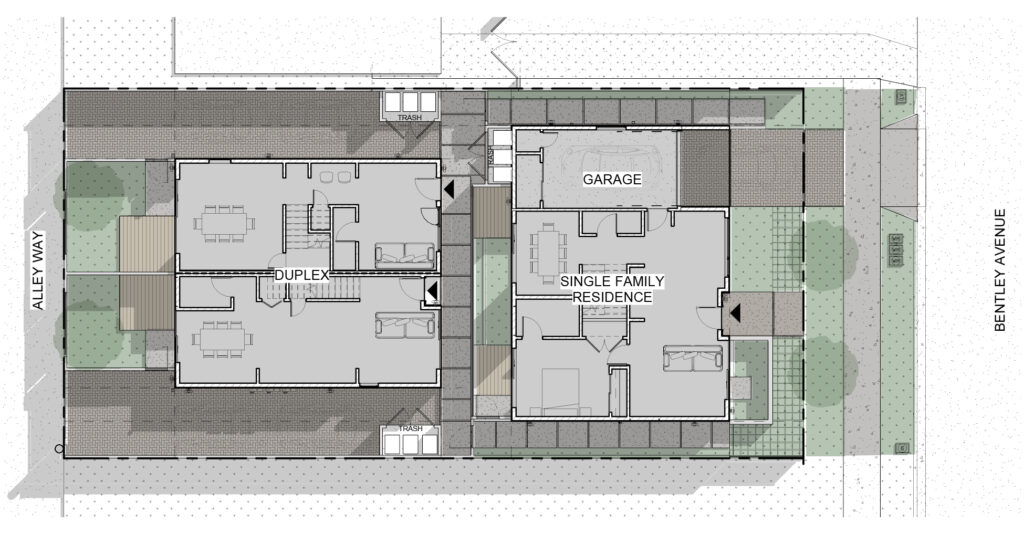
The project consists of a single duplex and single family residence, totaling 3 residential units. Each unit is designed to feel independent and spacious and connect to private outdoor space.
Key design elements include:
- Private landscaped areas adjacent to each unit
- Rooftop decks that extend usable living space provide access to views
- Large windows to maximize natural light
This configuration allows for increased density while maintaining a high-quality residential experience, aligning with Culver City’s vision for more flexible and diversified housing typologies.
Design Strategy: Contemporary and Contextual
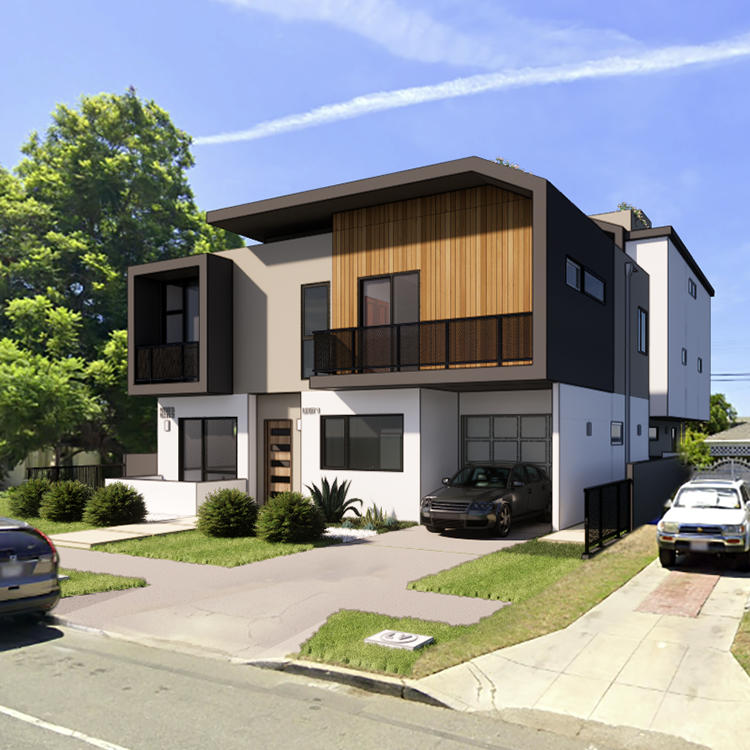
Architecturally, the project introduces a clean and modern aesthetic that maintains a relationship to traditional residential forms. The exterior combines synthetic wood cladding with stucco finishes, creating a balance between warmth and durability.
Large openings enhance daylighting and natural ventilation while creating a strong visual connection between interior and exterior spaces. Large openings also make the buildings feel less monolithic.
Sustainability and Energy Efficiency
Sustainability is embedded in both the architectural approach and building systems. In alignment with Culver City’s environmental priorities, the project incorporates:
- Solar panel systems to reduce energy consumption
- Heat pump water heaters for improved efficiency
- Passive design strategies that optimize daylight and ventilation
- Low water-use fixtures and energy-efficient mechanical systems
These features reduce operational costs for residents while supporting long-term climate and energy goals.
Navigating Zoning and City Coordination
One of the defining aspects of this project is its response to Culver City’s updated zoning code. The design leverages updated regulations that encourage increased residential development, particularly in areas zoned for multifamily housing.
Execution required close coordination with city departments, consultants, and the surrounding community. This collaborative process ensured that the project not only complied with state and local requirements but also aligned with broader planning objectives focused on housing accessibility and neighborhood integration.
A Model for Future Infill Housing in Culver City
This project demonstrates how small-scale infill development can meaningfully contribute to addressing urban housing challenges. By combining efficient land use, thoughtful design, and sustainable systems, it offers a replicable model for future housing in Culver City and across Southern California.